7 Years of Steady Growth and Proof That Patience Pays
When we first picked up Project Industrial in 2019, it didn't look like a headline property.
It was a tired mid-terraced house on a quiet street in Bacup, Lancashire - a former cotton mill town that most people drive past without a second thought. We purchased it for £48,500, and what happened next set the tone for everything we've built since.
This was our very first property acquisition under Abacus. It was the deal that proved our model worked in the real world. And in many ways, it became the blueprint.
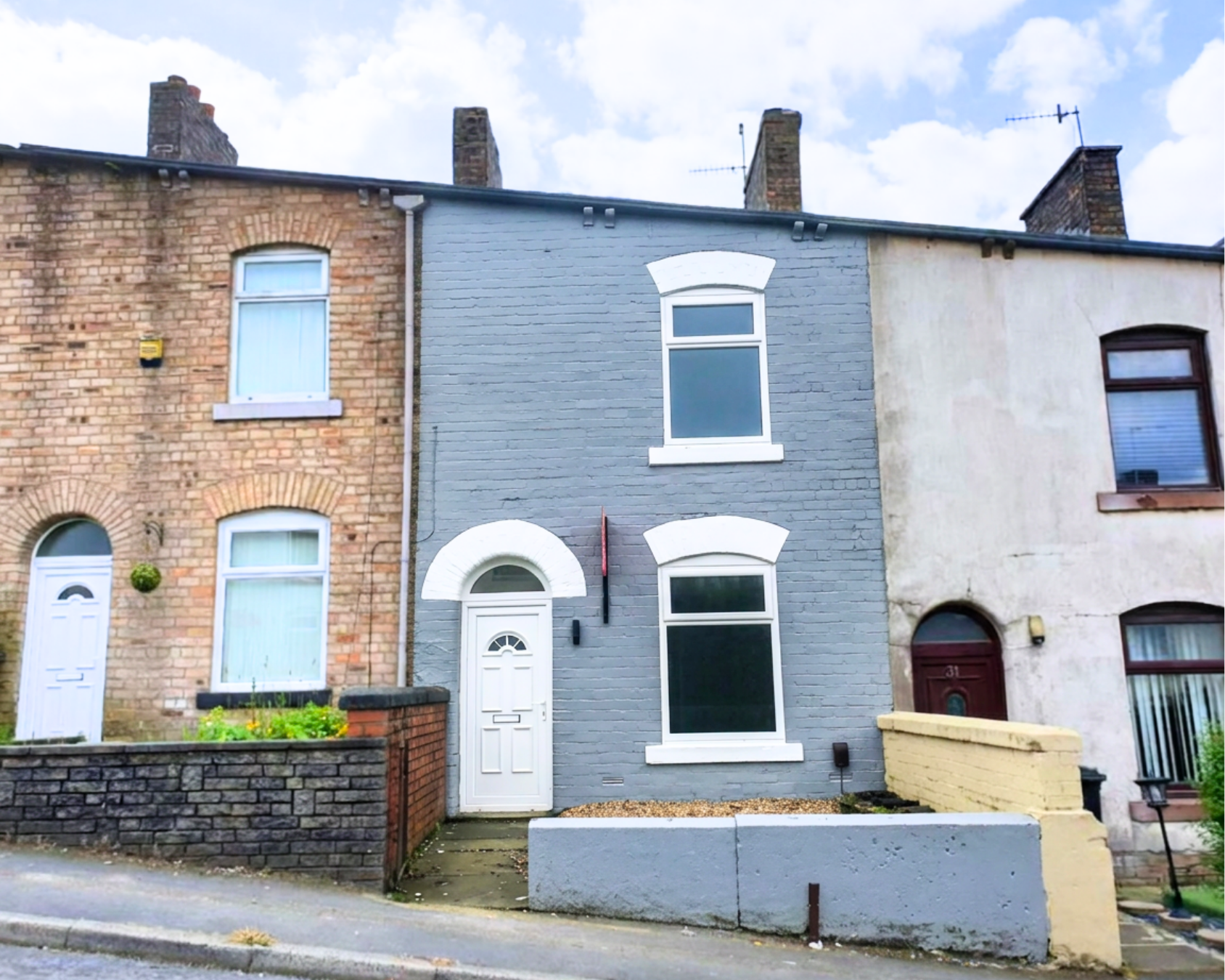
Project Industrial in Bacup, Lancashire. Post-development, 2019. Photo by Abacus Property Group
The Deal Was Built on Trust, Not Proximity
Here's something we don't always talk about openly - we never managed this project from the ground up ourselves.
The property was a three-hour drive away. So instead of trying to be everywhere at once, we did something that felt uncomfortable at first but turned out to be one of the best decisions we made. We brought in a specialist deal sourcer who not only found and negotiated the property but then stepped in as project manager for the entire renovation.
The property was visited once before purchase - just to walk it, sense-check it, and make sure the numbers felt right in person. Then once more after the works were completed, to see what had been built.
That's it. Two visits in nearly seven years of ownership.
What that taught us early on is that great investing isn't about being on-site every day. It's about having the right people, the right systems, and the confidence to trust the process.
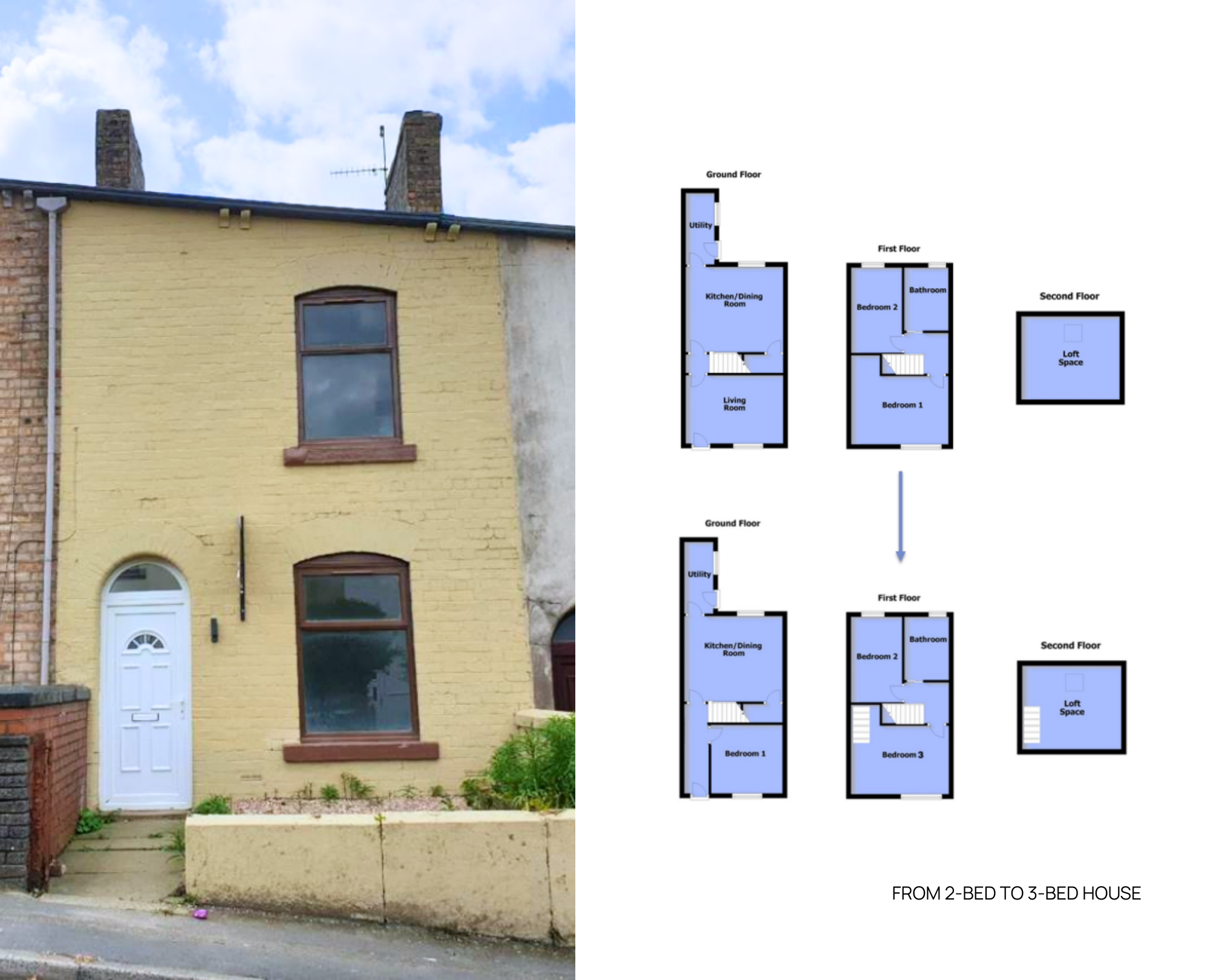
Project Industrial in Bacup, Lancashire. Pre-development, 2019. | Floorplan, before and after. Photo by Abacus Property Group
£15,000: The Birth of a Mini-HMO
The renovation was completed in October 2019, across eight weeks, and came in at £15,000 in total.
It wasn't glamorous work. But it was intelligent work.
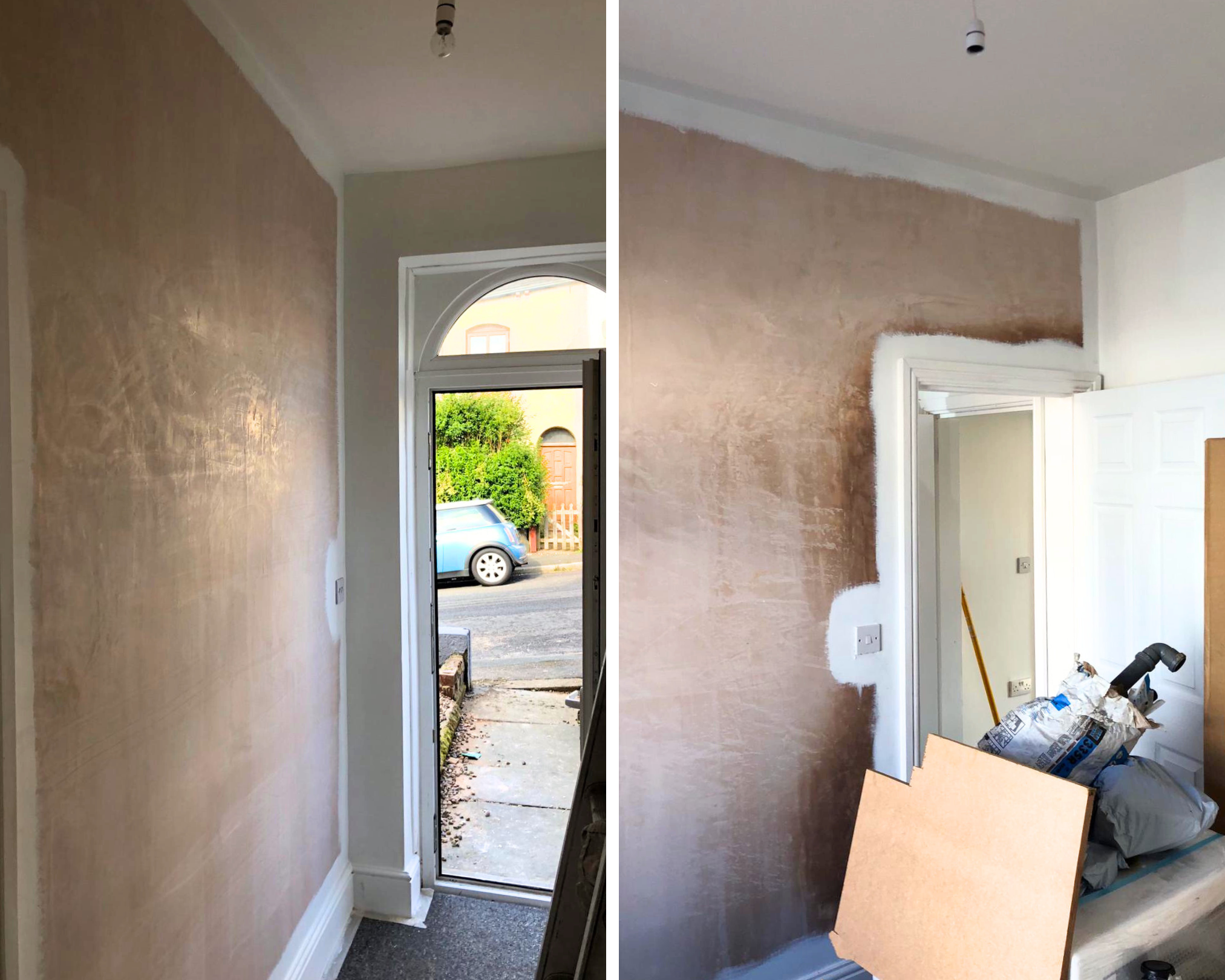
Partition wall built to separate the communal entrance and the new private bedroom. Photo by Abacus Property Group
The most important decision was creating an additional room. A partition wall was built on the ground floor to separate the communal entrance from the living space - creating a private Bedroom 1 where a living room once sat. Then a timber staircase was built to open up access to the loft (which was already converted) to create a desirable duplex double room - Bedroom 3.
A tired two-bedroom terraced house became a three-bedroom mini-HMO for working professionals.
The kitchen alone went through seven design iterations before it felt right. The fireplace came out, the floor was levelled and replaced with quality laminate, a breakfast bar and wall-mounted 4K TV replaced the old units. In addition to this a damp issue from an old water pipe was identified and resolved during works - the kind of hidden problem that could have caused years of trouble if it had been missed.
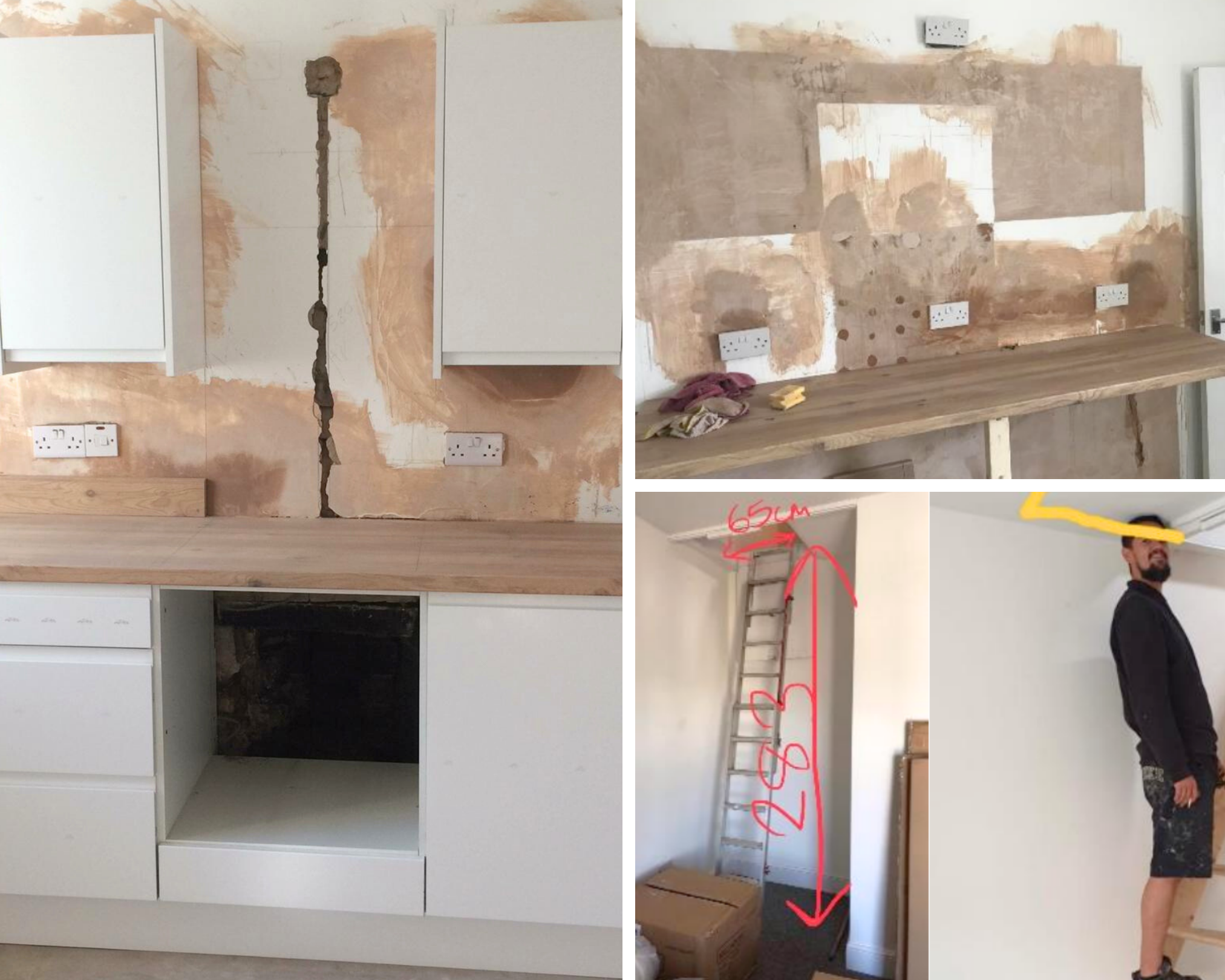
Development works. Photo by Abacus Property Group
The exterior was repainted in smooth grey masonry with white architectural details. New double-glazed windows went in. The front garden was cleared and laid with weed membrane and bark.
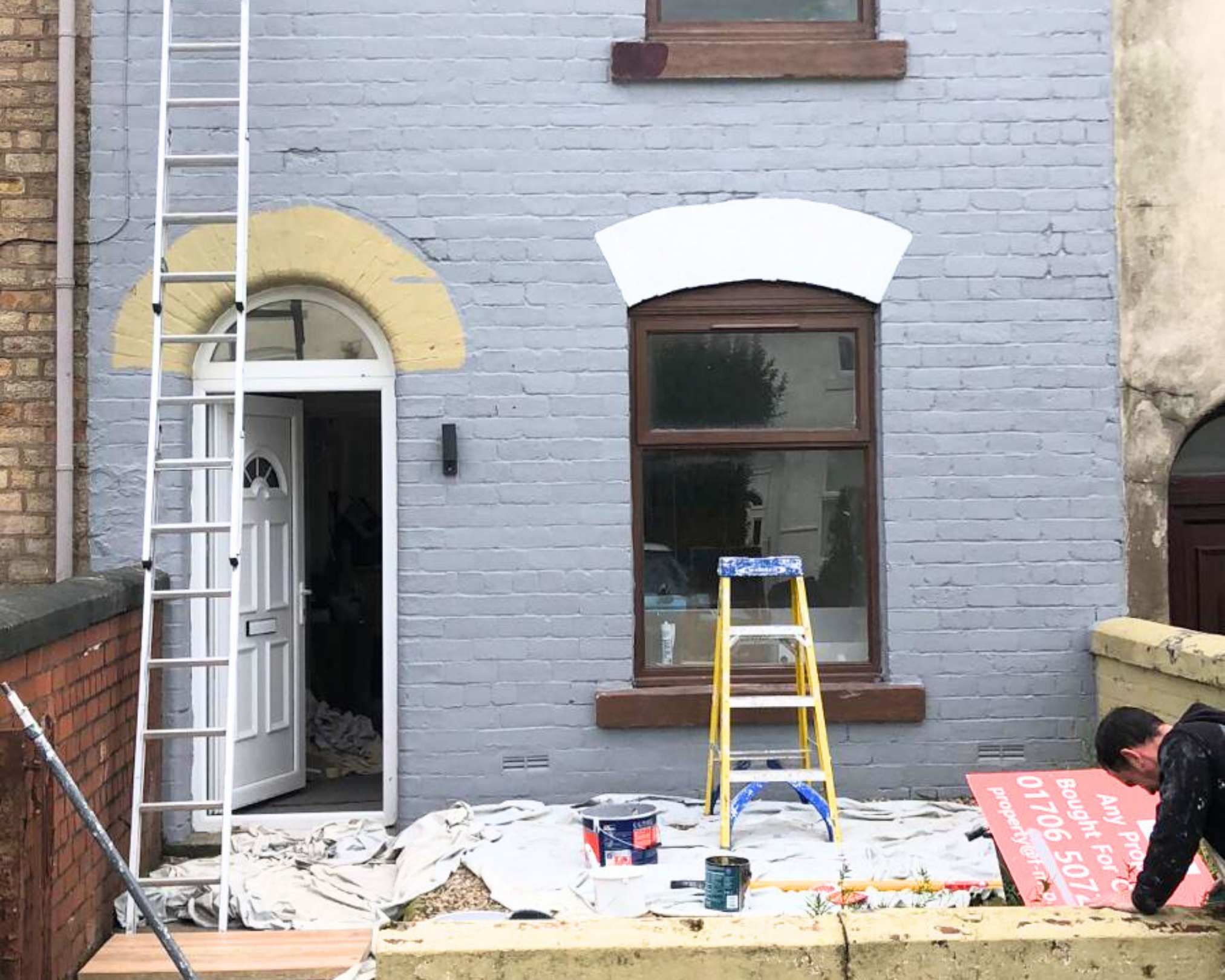
Development works, exterior repainted. Photo by Abacus Property Group
Nothing cheap. Nothing rushed. Because the people who would live there deserved a home, not just a room.
This was also our first development project. And it's where we really started to understand what good construction management actually looks like - how to read a schedule, how to manage trades remotely, and how to make confident decisions without being on the ground every day.
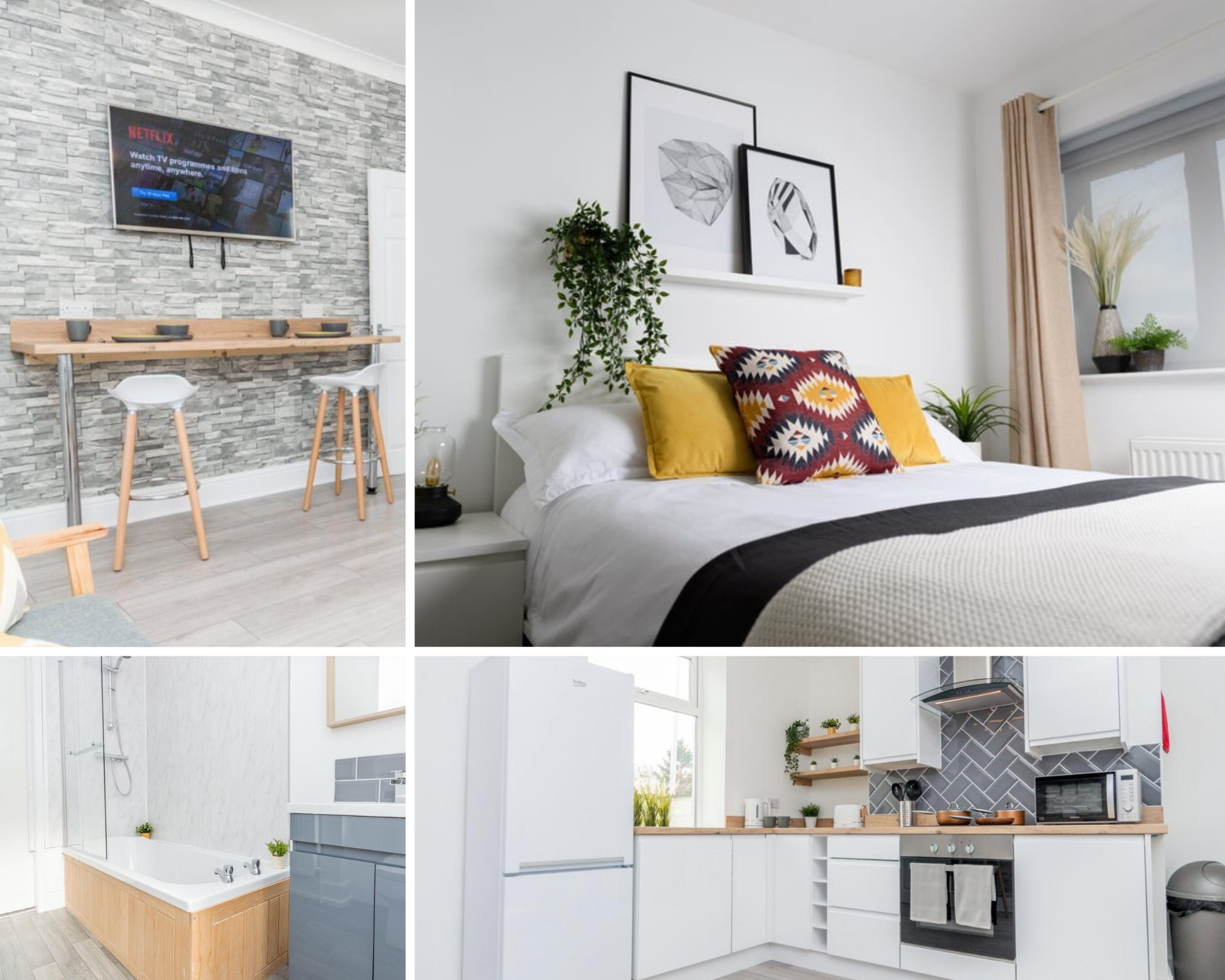
Post-development works. Photo by Abacus Property Group
The Income: Quiet, Consistent, and Still Growing
From the moment the first tenants moved in, the income came. And it has kept coming ever since.
The property launched as a bills-inclusive mini-HMO for working professionals - three rooms bringing in £1,125 per month at launch. Today that figure sits at £1,275 per month, a steady organic rise that reflects genuine demand rather than forced rent increases.
That is what passive income actually looks like in practice. Not a dramatic headline figure. A house in Lancashire, hours away, generating reliable monthly returns - month after month, year after year - without needing constant attention.
Professional tenants value well-finished, well-managed accommodation. Low turnover, fewer voids, predictable cashflow. That's what this property has delivered, consistently, for seven years.
According to Rightmove's 2025 Rental Market Report, average UK rents rose by approximately 8% year-on-year in 2025, with demand for quality furnished HMO rooms in Northern commuter towns continuing to outpace supply.¹ Project Industrial sits well within that demand pocket - and has done since day one.
The Capital Growth: Beyond What We Projected
We always believed this asset would grow. At the time of acquisition in 2019, Bacup was quietly moving - regeneration investment was flowing into the area, the town centre had just completed a multi-year heritage initiative, and Rossendale Council had secured significant funding for local economic development.
We bought into that trajectory early. And we bought right.
The numbers tell the story clearly:
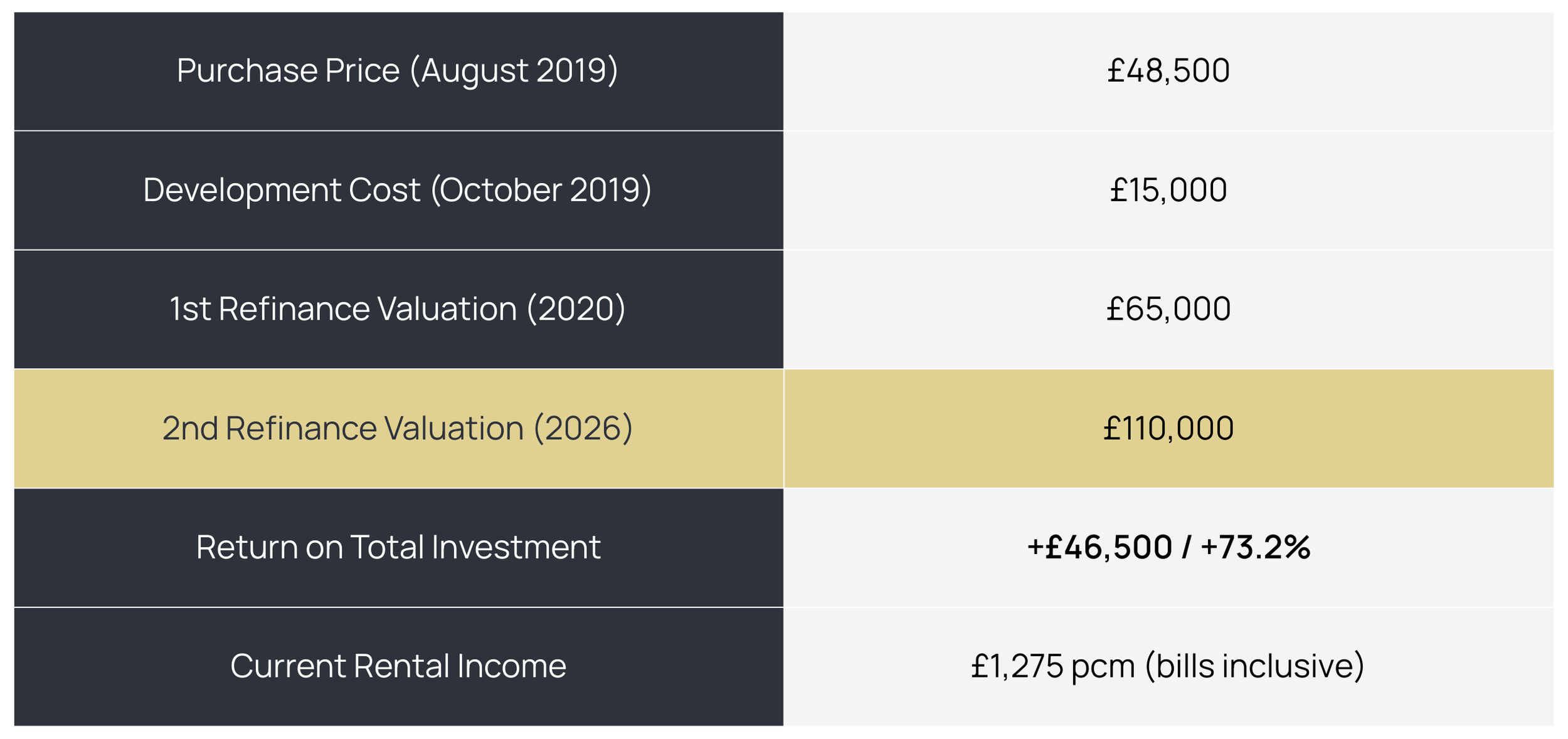
More than 3% compounding year on year. Across nearly seven years.
Both refinances allowed us to release equity and recycle it back into new projects, while the property kept doing what it does best: generating income and growing in value.
You don't have to exit to win.
That is the power of the strategy. And this property proves it.
“I always expected the capital growth on this property. If anything, the capital appreciation has exceeded expectations.”

Post-development works. Photo by Abacus Property Group
What the Mini-HMO Model Proves
One of the clearest lessons from this property - and one we now carry into every acquisition - is this: don't underestimate the mini-HMO.
A three-bedroom professional HMO, sitting below the mandatory licensing threshold, is one of the most straightforward and versatile assets in residential property. Under Rossendale Borough Council's current regulations, properties housing fewer than five people from more than one household do not require an HMO licence.² Project Industrial complies fully with all room size, fire safety, gas, and electrical requirements - without the licensing overhead of larger HMOs.
And here's the flexibility that most people miss: if the market ever shifts, the layout can revert to a standard single buy-to-let without major structural work. The asset isn't locked into one use case.
Easier to convert. Easier to manage. Simpler to finance. And when bought and developed correctly - quietly profitable for years without demanding much in return.
“This property has been a quiet, profitable and highly sustainable high-performing asset in terms of its net yield with only limited capital investment required.”
The latest NRLA Landlord Confidence Index highlights that most professional landlords now focus on long‑term portfolio sustainability rather than short‑term flips ³. Project Industrial is a textbook example of why.
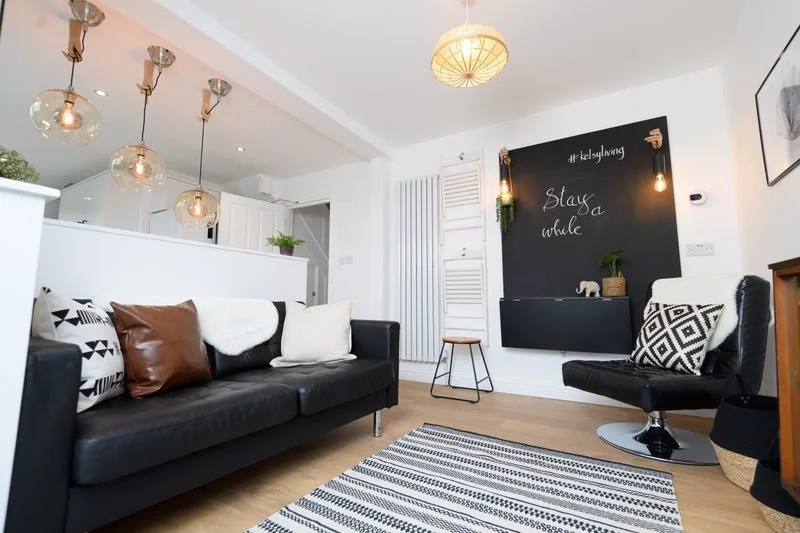
Post-development works. Photo by Abacus Property Group
The Takeaway for Investors and Landlords
Nearly seven years on, this property still generates income, still appreciates in value, and still works hard without working us hard.
Here's what it comes back to every time:
Buy right, not fast. £48,500 for the right house beats twice the price for the wrong one.
Add real value early - that £15,000 refurb wasn't cosmetic. It created an additional bedroom, unlocked the loft (which was already converted), and gave professional tenants a space they genuinely wanted to live in.
Refinance smartly, so the portfolio stays liquid and the next opportunity stays within reach.
And hold with purpose, because the compounding - both in rent and in value - only reveals itself over time.
That's what sustainable property investing looks like in practice.
References
¹ Rightmove, Rental Price Tracker and Market Report Q4 2025, published January 2026.
² Rossendale Borough Council, HMO Licensing Requirements under the Housing Act 2004, as referenced in Abacus Property Group Renovation Report, July 2020.
³ NRLA, Landlord Confidence Index 2025, published October 2025.