Why now might be the time to source land in Rugby & West Midlands
The UK's planning landscape is shifting dramatically in late 2025, and savvy investors and landlords are starting to notice something interesting happening in Rugby and the wider West Midlands.
While others debate the changes, there's a narrow window opening for those who understand what these reforms actually mean on the ground.

Photo by Lulu Black. Unsplash.com
The planning reform wave is here
The government isn't messing about. They've set a target of 1.5 million new homes this Parliament, and they're dismantling the barriers that have held up development for years.⁽¹⁾
The Planning and Infrastructure Bill introduces a build-out reporting framework requiring developers to submit build-out statements, notify authorities before commencing development, and report annually on housing delivery.⁽²⁾ This is the first time we'll have a comprehensive picture of actual build-out rates.
But here's what matters for you: local planning authorities now have the power to decline applications from developers who've consistently failed to build out previous permissions at a reasonable rate.⁽²⁾
Translation? The days of land banking are ending. Build it or lose it.
What's actually changing
The reforms introduce a new "Medium Development" category covering sites with 10-49 homes or up to 1.0 hectare, with more tailored and proportionate policy requirements for each category.⁽³⁾ Smaller sites face less red tape, which means faster approvals and quicker returns.
Planning decisions are being streamlined with only the largest and most contentious projects requiring councillor approval.⁽⁴⁾ More decisions will be delegated to planning officers, cutting through the political delays that have frustrated developers for years.
The government is also overhauling the statutory consultee system, removing bodies like Sport England and Theatres Trust from mandatory consultation on planning decisions.⁽⁵⁾ Fewer consultees means fewer delays.
And crucially: compulsory purchase orders no longer need central government approval, and "hope value" is being removed from land valuations.⁽⁶⁾ Local authorities can now acquire land at existing use value, making land assembly for development cheaper and faster.
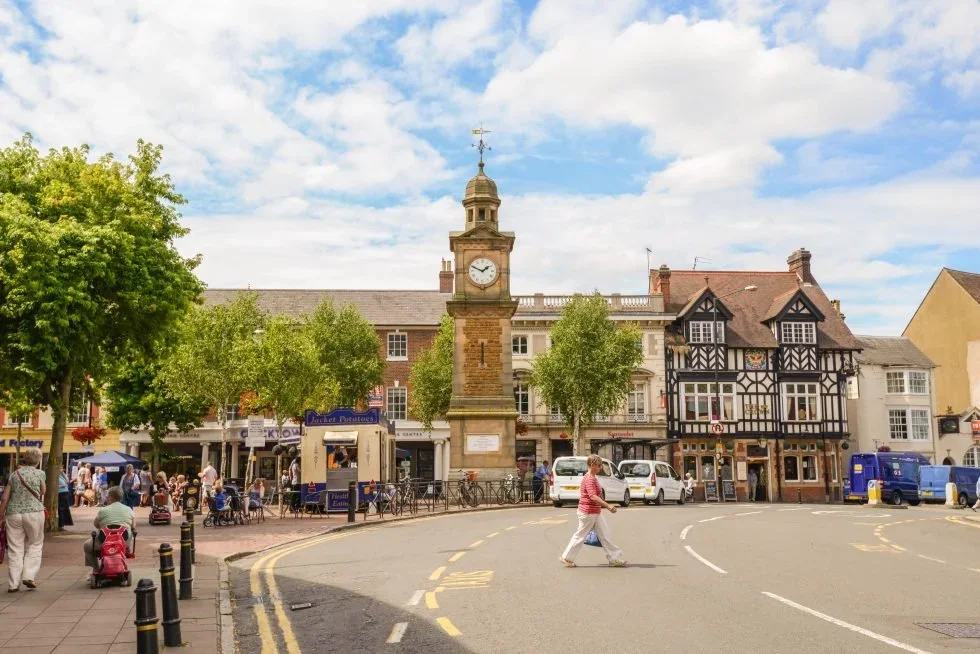
Photo obtained from www.rugbyfirst.org. The Clock Tower, Rugby Town Centre
Why Rugby and West Midlands? Why now?
Here's what the data's showing.
Rugby is the fastest growing authority in the West Midlands.⁽⁷⁾ Not one of the fastest. The fastest.
The location advantages are hard to ignore. Rugby offers direct rail links to London in 53 minutes and Birmingham New Street in 33 minutes, sitting at the heart of the UK's motorway network with access to M6 Junction 1, A5, and M45.⁽⁷⁾
The numbers back this up. Average house prices in Rugby reached £275,000 in June 2025, up 2.5% from the previous year, while private rents climbed to £993 monthly in July 2025, representing an 8.9% annual increase.⁽⁸⁾
That rental growth rate? It's significantly outpacing typical regional performance.⁽⁸⁾

Photo by Abacus Property Group. Project Lawford, 2025
The development pipeline is expanding
Homes England has commissioned work on approximately 40% of the 4,000 homes remaining in the South West Rugby Urban Extension, one of the largest projects in the region.⁽⁹⁾ This isn't speculation – it's already moving.
Miller Homes acquired a 13.82-acre parcel in Houlton for up to 216 new homes, following their £215m acquisition of St Modwen Homes business to drive increased delivery.⁽¹⁰⁾ Major players are committing serious capital here.
Development sites with planning permission are coming to market regularly. A 1.48-acre Rugby town centre site with full planning for 122 apartments and 73 parking spaces is currently available, located within walking distance of Junction One Shopping Park and Rugby Railway Station.⁽¹¹⁾
What investors and landlords should do
Understand the new accountability framework
The build-out reporting requirements mean you can't sit on land anymore. If you're acquiring development sites, have your delivery timeline mapped before you buy.
Projects need to show genuine progress or risk losing permissions.
Target medium-density sites strategically
Sites in that 10-49 home sweet spot are getting easier to develop. The government is actively streamlining regulation and supporting market diversification, with SME builders playing a crucial role in bringing competition and faster build-out rates.⁽³⁾
These projects move faster through planning and offer better risk-adjusted returns than larger developments.
Get ahead of the infrastructure investment
The West Midlands Combined Authority is investing £4.4bn through the HS2 Growth Strategy, with 20 connectivity schemes ensuring nowhere in the region is more than 40 minutes from an HS2 station.⁽¹²⁾
Rugby's already well-connected. When those HS2 improvements land, proximity value jumps again.
Focus on rental demand fundamentals
First-time buyers in Rugby spent an average of £232,000 on property in June 2025, while private rental prices show strong upward pressure with 8.9% annual growth.⁽⁸⁾
Buy-to-let fundamentals remain solid, particularly in areas with strong transport links and employment access.
Act while competition is still moderate
Here's the reality: most investors are still watching from the sidelines, trying to understand what these reforms mean.
Rugby Borough Council has set aside £5 million for town centre investment and is actively seeking partnerships and further investment to realise the town's potential.⁽⁷⁾ Local government is backing growth, not blocking it.
The development sites with planning permission today will be worth significantly more once the Planning and Infrastructure Bill passes into law. Those requiring fresh applications will benefit from faster, more predictable approvals.

Photo obtained from www.rugbyfirst.org . Copyright Jamie Gray 2022 all rights reserved
The convergence opportunity
What's happening in Rugby isn't happening in isolation.
The West Midlands has the UK's youngest, fastest-growing and most diverse population, with property demand set to grow as HS2 nears completion.⁽¹²⁾ Regional growth is accelerating precisely as planning reform removes development barriers.
This convergence creates a specific window.
The reforms are announced and taking effect, but the market hasn't fully priced them in yet. Land values reflect yesterday's planning system, not tomorrow's streamlined approval process.
Development sites that would have taken 18-24 months to deliver might now take 12-15 months. That compression in timeline impacts returns materially.
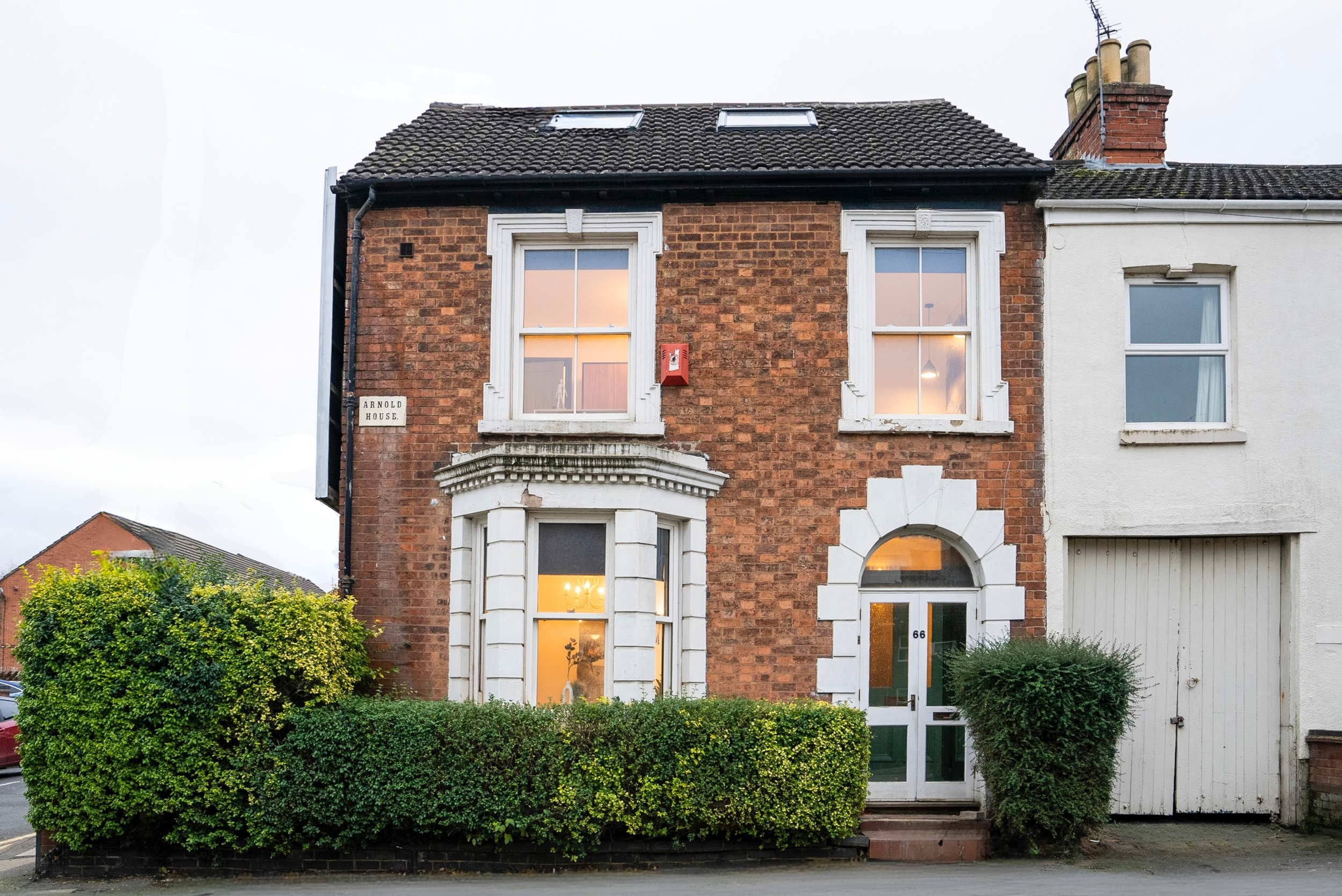
Photo by Abacus Property Group. Project Railway, 2024
What to watch for in December 2025
The Planning and Infrastructure Bill cleared the House of Lords on 24 November 2025 and is on track to receive Royal Assent before the end of the year, with the Commons scheduled to consider final amendments on 8 December 2025.⁽¹³¹⁴⁾ The Bill has been passed between the Commons and Lords with most amendments now agreed.
Track the final stages closely. They'll determine exactly how aggressively the build-out requirements get enforced.
Additional powers enabling local planning authorities to vary and set locally-specific planning application fees are coming, alongside measures to address conflicts between new applications and pre-existing outline permissions.⁽⁴⁾
The Compulsory Purchase Process and Compensation Reforms consultation closed on 13 February 2025, with results expected before year-end.⁽⁶⁾ These will clarify how land values get assessed for CPOs moving forward.
Final thought
Planning reform creates winners and losers.
Winners understand that land without delivery capability is becoming a liability, not an asset. They're targeting sites that match the new system's incentives: medium-density, well-located, with clear paths to delivery.
Losers keep approaching land investment like it's 2015, assuming they can bank sites indefinitely while waiting for values to climb.
Rugby and the West Midlands offer something specific right now: strong underlying fundamentals meeting transformative regulatory change.
Regional growth is real. Transport connectivity is exceptional. Development appetite is increasing. And the planning system is shifting from blocking development to accelerating it.
The question isn't whether these reforms will drive development growth in Rugby and the West Midlands.
The question is whether you'll position before everyone else figures it out.
References
[1] UK Government, Planning and Infrastructure Bill, 2025
[2] UK Government, Planning Reform Working Paper: Speeding Up Build Out, 2025
[3] UK Government, Planning Reform Working Paper: Reforming Site Thresholds, 2025
[4] Burges Salmon, The Planning and Infrastructure Bill 2025
[5] Geldards, UK Planning Reforms 2025: Key Changes and How to Prepare
[6] Burges Salmon, Update on the Planning and Infrastructure Bill, November 2025
[7] West Midlands Combined Authority Investment Prospectus 2023, Rugby Town Centre
[8] Office for National Statistics, Housing prices in Rugby, June 2025
[9] Atkins, Atkins to deliver masterplan for Homes England's Rugby scheme
[10] The Business Desk, Land sale could pave the way for 216 additional new homes in Rugby, 2025
[11] Rugby Borough Council Development Sites (various sources)
[12] West Midlands Combined Authority Investment Prospectus 2023
[13] DHA Planning, Planning and Infrastructure Bill Clears House of Lords – Update, November 2025
[14] Burges Salmon, Update on the Planning and Infrastructure Bill, December 2025
Data accurate as of December 2025. Property investment carries risk. Always conduct independent research and seek professional advice before making investment decisions.
All images are credited where possible. If an image belongs to you and proper attribution is missing, this was unintentional. Please reach out so I can correct the credit or remove the image as you prefer.