Why Your 'Cheaper' Flat Is Costing You More Than You Think
It's a question we hear a lot: why does an HMO room cost more than a one-bed flat down the road? On the surface, the flat looks like the obvious choice.
We get why. But rent figures and real monthly costs are two different things — and once you add them up, the comparison shifts pretty quickly.
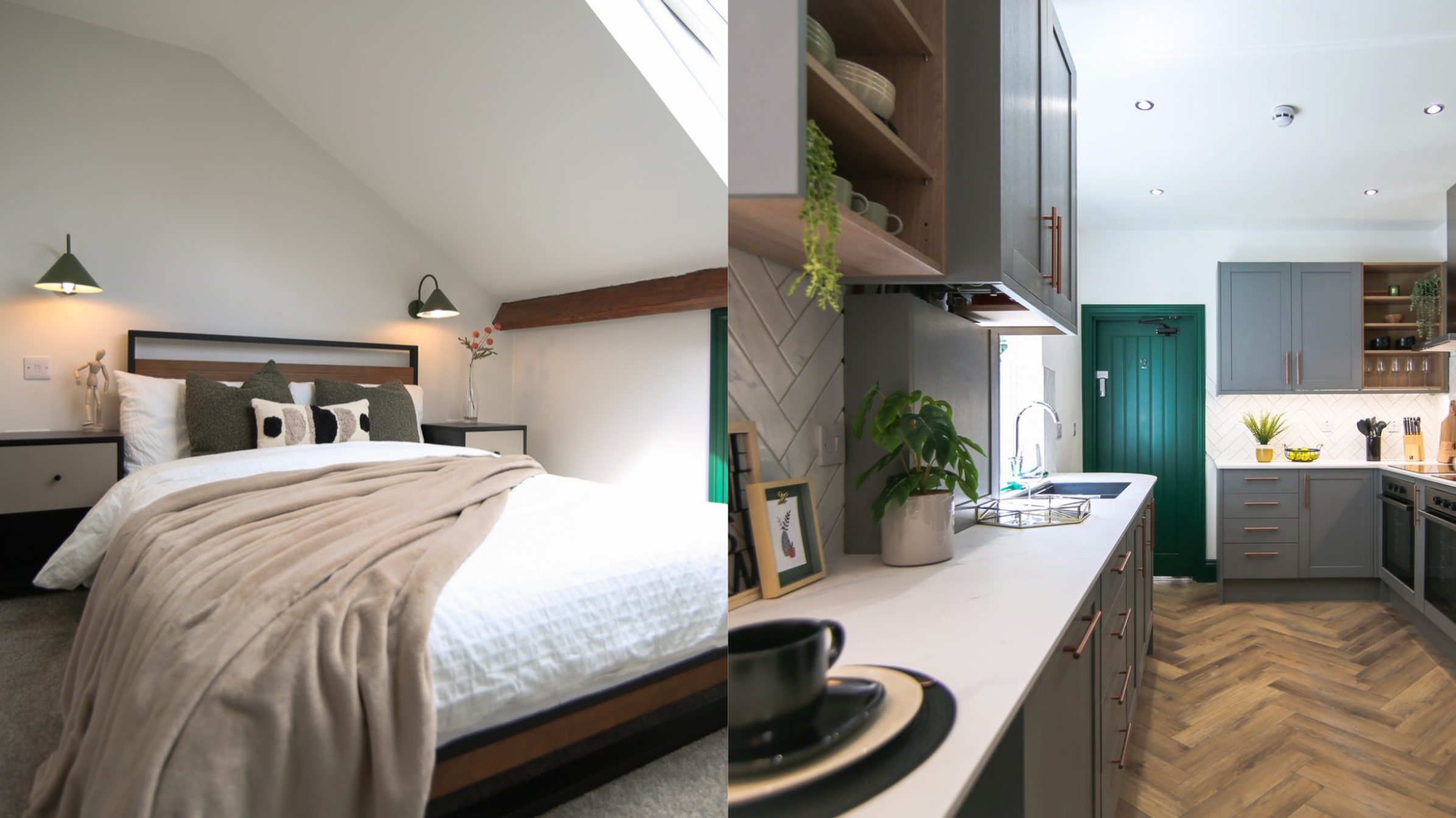
Photo by Abacus Property Group, Project Craven (2022)
The rent figure isn't the real figure
When you sign for a one-bed flat, the rent is only part of what you'll pay. Once you're in, the bills start rolling in one by one. Council tax. Gas and electric. Water. Broadband. TV licence. Contents insurance. None of that comes with the flat — it's all on you to sort and pay for separately.
We see this play out with our own tenants all the time, so we ran the numbers properly. We compared a typical one-bed flat in Birmingham against one of our all-inclusive HMO rooms, both listed at £750 a month:
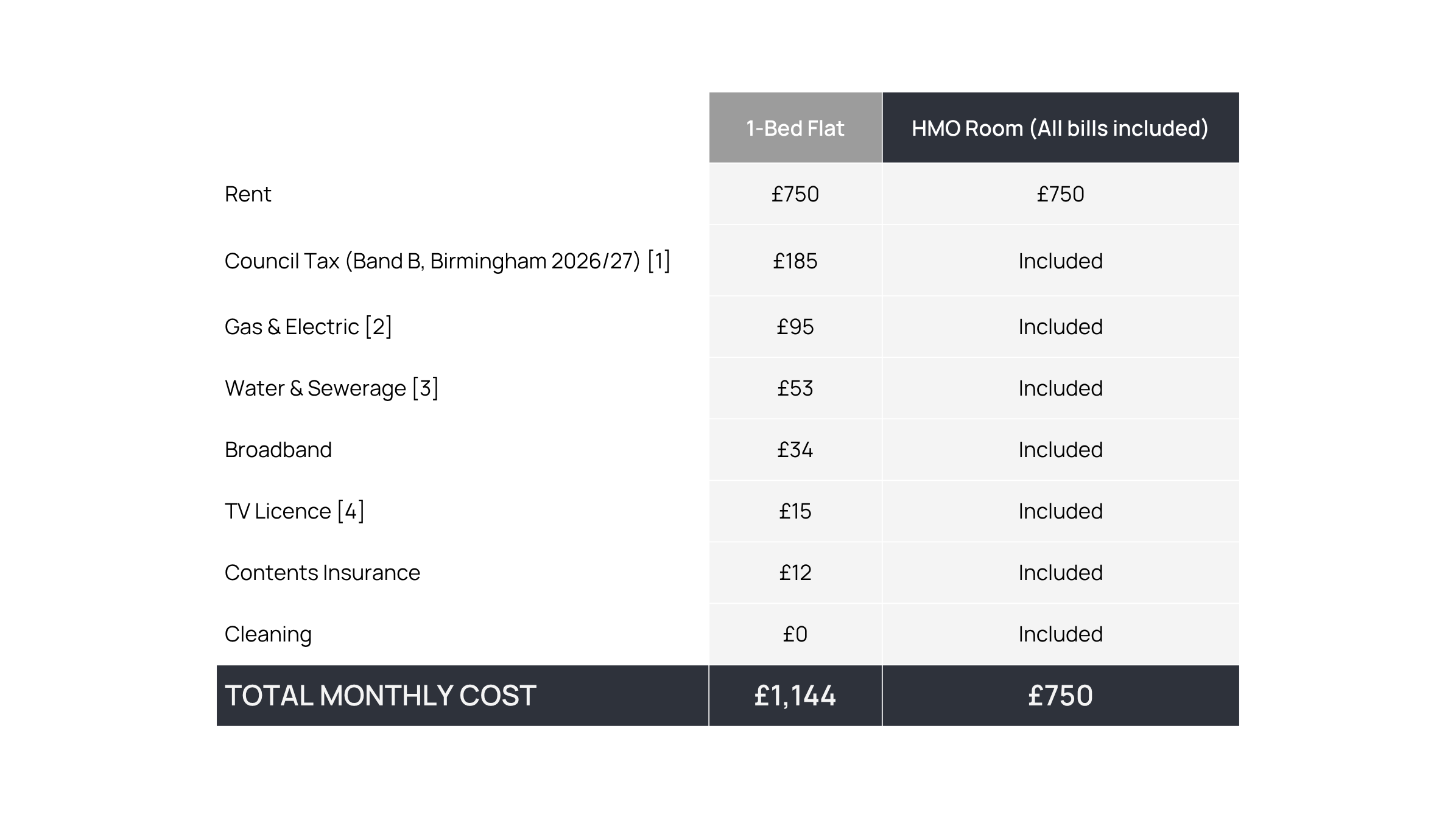
A quick note on the numbers: £394 a month is simply £1,144 (the flat's full monthly cost) minus £750 (the HMO room rate). Multiply that by 12 and you get £4,728 a year. Every line item in the table is taken from a published 2026 source rather than estimated, so the figures can be checked against the original data if needed.
So that's £394 more a month, just to live in a flat that was listed at the same price as the room. Over a year, that's nearly £4,750 extra.
The flat was never actually cheaper. It just looked that way on the listing.

Photo by Karola G from Pexels
Moving in costs more than you think too
It's not just the monthly gap. Moving into a flat hits your wallet hard in the first few weeks too. You're registering for council tax, setting up utility accounts from scratch, and waiting around for a broadband engineer — usually a two week job. Then there's furniture to buy, because the flat's empty, and contents insurance to organise before anything you own is actually covered.
Realistically, you're looking at another £500 to £800 in the first month alone, on top of everything else.
We see the opposite with our own rooms. Tenants pick up their keys, the WiFi's already working, the bills are already set up, the room's already furnished, and we've already vetted everyone else living there. There's genuinely nothing left to sort.
Who's actually choosing HMOs

It's easy to assume HMOs are just a fallback option for people who can't afford better. From what we see day to day, a lot of the people choosing them are working professionals who've done the maths and worked out that paying one simple monthly amount makes more sense than juggling six different direct debits.
Nurses on rotating shifts. Graduates who've just moved to a new city for their first job. People relocating for work who need somewhere to live straight away, not in three weeks once broadband's sorted. We house a fair few of all three. Private renters in England are already spending around a third of their income on rent before bills are even added on top [5]. When money's tight, a bills-included room genuinely is the more sensible option, not a compromise.
Renting isn't really a "stepping stone" any more either — over a third of people in England now rent privately long-term, and that number's been climbing for years [5]. For a lot of our tenants, this is just how they live, not a temporary arrangement before they buy.

So is the flat really cheaper?
Not by the numbers. A flat advertised at the same price as one of our rooms ends up costing significantly more once you factor in everything that isn't included. The room rate might look higher at first glance, but it's covering a lot more than people give it credit for.
If you're weighing up a flat against a room and going purely on the rent figure, do the maths properly first. We've seen it catch people out more times than we can count.
We're Abacus Property Group, and we manage HMO rooms across the West Midlands built for working professionals who want somewhere simple, sorted, and ready to move into. Get in touch if you'd like to know more.
References
[1] Birmingham City Council. (2026). Budget for Birmingham 2026–27: Council tax help and information booklet. https://www.birmingham.gov.uk/download/downloads/id/18855/budget_for_birmingham_council_tax_help_and_information_booklet_2026_to_2027.pdf
[2] Ofgem. (2026). Energy price cap. https://www.ofgem.gov.uk/energy-regulation/domestic-and-non-domestic/energy-pricing-rules/energy-price-cap
[3] Water UK. (2026). Average household water bills 2026–27. https://www.water.org.uk/advice-for-customers/your-bill
[4] TV Licensing. (2026). TV Licence fees. https://www.tvlicensing.co.uk/check-if-you-need-one/topics/how-much-is-the-tv-licence-fee-au1
[5] Ministry of Housing, Communities and Local Government. (2025). English Housing Survey 2024–25: Headline report. GOV.UK. https://www.gov.uk/government/statistics/english-housing-survey-2024-to-2025-headline-report